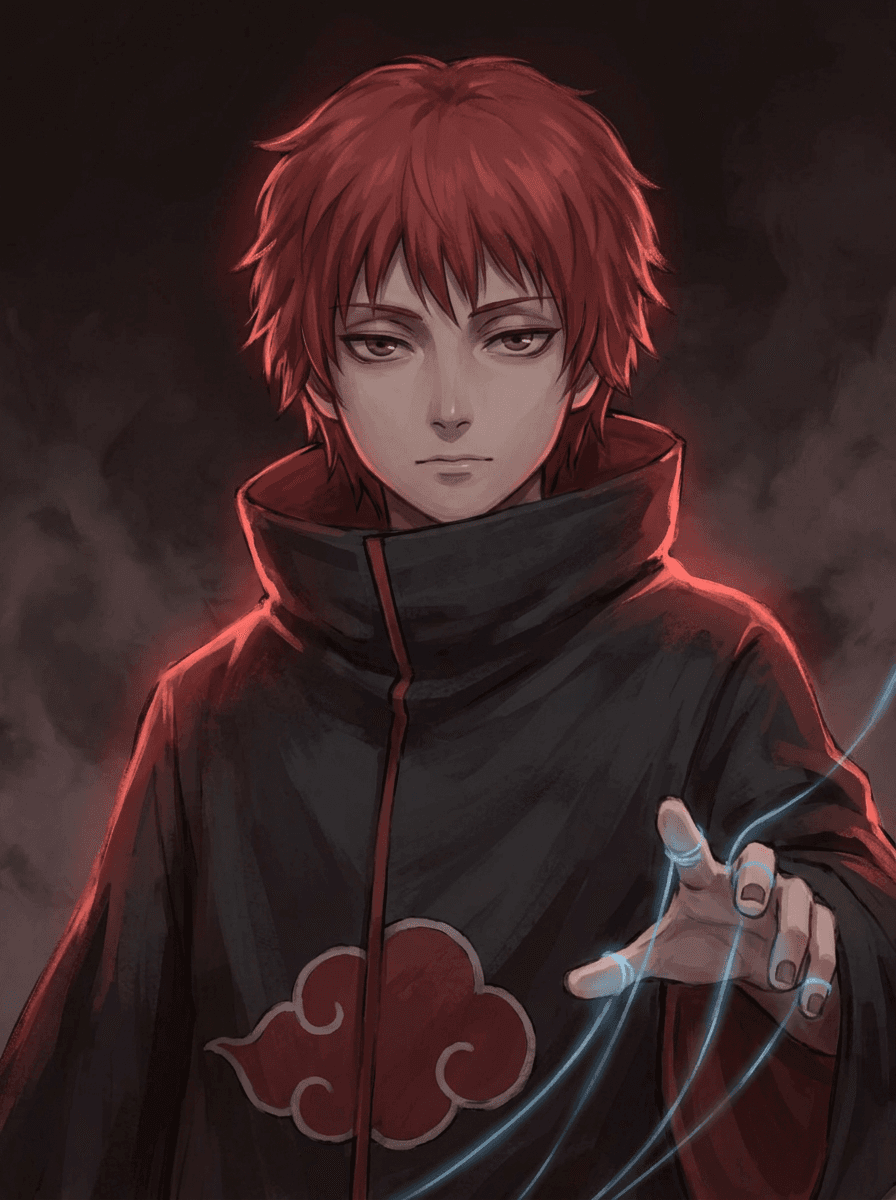
Kankurō

Sunagakure · Puppet master · The middle of the Sand Siblings

Someone else built all three of his puppets. He built the hands that carry them.

The middle of Sunagakure's three siblings. He grew up in his sister's shadow and lived in fear of his brother; in the end he chose to stand between them, and never moved from that spot again.

Kankurō — AniList profile portrait (about 230 pixels)
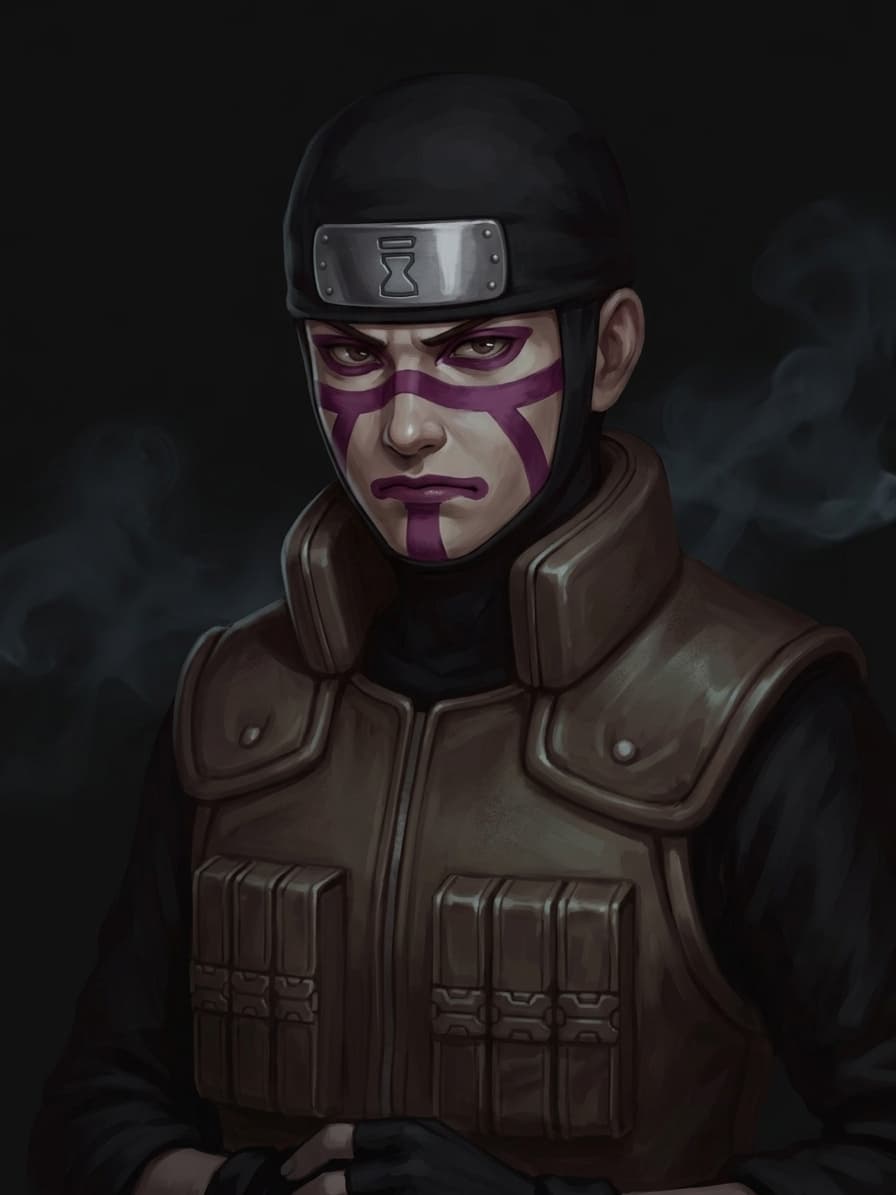
隈取
The face paintPurple lines carrying the trace of kabuki kumadori. The archive's reading: the master paints his own face to match the bodies in his chest.

The record

From Sunagakure's register: the numbers, the measurements, and the thing always wrapped on his back.

Birthday
15 May
Height
165 cm (I) · 175 cm (II)
Weight
61.2 kg
Blood type
B
Age
14 (I) · 18 (II)
Rank
Genin (I) → Jōnin (II)
Shinobi registration
54-002
Team
The Sand Siblings — Gaara, Temari · Sensei: Baki
What he carries
A bandaged puppet — always wrapped, always ready
Likes · dislikes
Hamburger steak, collecting puppets · spinach, children

The workshop

Puppetry is not a talent but a trade: first the hand's work, then the chakra's. Three big benches, and the four tools that sit beside them.

  • Kugutsu no JutsuPuppet TechniqueChakra threads from the fingertips: each thread a joint, each joint a decision.A puppet master stands beside the fight, not inside it. Chakra leaves the fingertips as thread, ties into the puppet's joints, and the smallest twitch of a finger becomes a blade at the far end of the wood. The difficulty is not the thread but the count: ten fingers mean dozens of separate movements at once, each held apart in the master's head. In exchange he buys one thing — he is not the one who gets hit. His whole craft rests on that trade: the wood pays the price, he keeps the ledger.One thread per fingerFighting at rangeThe wood pays
  • Kurohigi Kiki IpponBlack Secret Technique — Machine One ShotTwo puppets, one move: one is the trap, the other is the blade.The first half of the pincer is Kuroari: its body is a hollow chest that opens, folds over the target and locks. The second half is Karasu — its arms collapse into a bundle of blades and enter through the marked points on Kuroari's shell. The two puppets never see each other; the same hands run both, which is why this is not a combination but the two ends of a single movement. No angle of escape is left inside. Once the trap has shut, the only thing left for the master to do is close his hands.Kuroari, kamae.Trap plus bladeNo angle outThe tips are poisoned
  • Akasuna — Kızıl Kum'un devralınmasıHeir to the master's own bodyThe man who built his three puppets had fled the village. Kankurō inherited the puppets first, then the man.Sasori built Karasu, Kuroari and Sanshōuo; after he left Suna, all three came into Kankurō's hands over the years. Kankurō did not merely carry them — Karasu in particular he rebuilt until it was barely recognisable. Years after the poison nearly killed him, the fourth arrived: Sasori's own body. The core socket in that chest is empty now; the thing that kept Sasori standing was there, and is not. The only thing moving it is Kankurō's thread. The same craft, turned the other way.An empty coreThe master's bodySame craft, other way
  • Chakra thread controlThe thread does not only tie to puppets: it ties to a rock, a door, a comrade about to fall. Invisible, fine, and it carries the master's reach far past the length of his arm.
  • Poisoned bladesIn Suna's puppet brigade the blade alone does not count; what counts is the coat brushed onto its edge. One scratch is enough: the fight goes on a while after it, then ends by itself.
  • Puppet repairThe night he met Sasori he lost all three of his puppets. In the years after he rebuilt all three at his own bench. In this craft what separates a master is not that he can strike, but that he can bring back what broke.
  • Suna's battle puppetsPuppetry is Sunagakure's signature; the village's puppet brigade has come off the same bench for generations, and that bench's rules were written long before Kankurō. After the war he became one of its most senior masters.

The puppet chest

All four hang from a string above. Choose one: its thread pulls taut, the body comes apart joint by joint, and you see what was put inside.

Karasu diagram: the puppet on its string, split at the joints, its hidden weapons visible in the gaps.

Karasu

Crow

Role in a fight
Assault
Built by
Sasori — then passed through Kankurō's hands

Kankurō's first puppet and the one he has worked over most. Sasori built the body; the mechanisms on it now are Kankurō's: arms, legs and head detach and attack on their own. Karasu usually opens the fight — it floods the ground with poison smoke, cuts the sightlines, and lands the first cut.

What opens up

  1. Detachable limbsArm, leg and head break away and attack separately; each piece runs on its own thread.
  2. Concealed blade housingsBundles of folded blades sit in the forearms; opened, a single arm carries four separate edges.
  3. Poison smokeA cloud from the chamber in the abdomen covers the ground: it blinds the target first, then goes into the lungs.
  4. Launched needlesPoison-coated needles from the mouth and shoulder; the opening move of a ranged fight.

The left and right arrow keys work too; Home and End jump to the first and last puppet.

The poison table

The real weapon of this craft is not the wood: it is the thin coat brushed onto the blade. Kankurō measured it once, on his own body.

The poison

Sasori's mixture

Sasori's mixture does not kill at once; it locks the muscles in order and takes the breath last. When Hiruko's tail opened Kankurō's chest, three days were left — three days, and that was everything a man who had lost his fight still had.
The antidote

Sakura Haruno's work

Suna's physicians could not break the mixture down. Sakura Haruno, arriving from Konoha, first drew the poison out of his body, then built the antidote from the sample she had taken. When she finished she had not only saved Kankurō: the same antidote was in the pockets of the team that would face Sasori days later.

Kankurō did not die that night. When he woke he had lost the fight and all three of his puppets; one job was left, and he never put it down again: being his brother's older brother.

The hands at the other end

Kankurō moves four puppets. Four people moved him — and those strings come down from above.

A life in five entries

Five entries: an inheritance, a withdrawal, a poison, an antidote, and the closing of a chest.

  1. Before 14

    The wood the master left

    When Sasori left Sunagakure the puppets he had built stayed behind. Karasu, Kuroari and Sanshōuo came into Kankurō's hands over the years — and he did not settle for using them: he opened them, took them apart, rebuilt them his own way. The road to mastery in Suna is always the same; first you carry what someone else made, then you make it unrecognisable.

  2. Age 14

    The hand raised — across from Shino

    In the Chūnin exam final he drew Shino Aburame, and withdrew without setting foot in the arena. The reason was not his opponent: Suna had a plan for Konoha that day, and Kankurō's puppet was not to be shown on the sand. It is the strangest entry in that exam's record — the only candidate who chose to lose.

  3. Age 18

    The pincer shut, the shell cut

    When Akatsuki took Gaara, Kankurō went after them alone and came face to face with Sasori. He set the pincer: Kuroari shut, Karasu's blades went in through the marked points. But what was inside the trap was not Sasori — it was Hiruko's shell, and that shell's tail reached out and opened Kankurō's chest. By the end of the fight all three of his puppets were gone and the poison was already moving.

    Kurohigi: Kiki Ippon.
    Kankurō — calling the technique
  4. Age 18

    Three days — Sakura's antidote

    The poison was locking his muscles in order, and Suna's physicians could not break the mixture down. Sakura Haruno, arriving from Konoha, drew the poison out first and then built the antidote from that sample. Kankurō walked out of that room alive — and for the first time in his life he survived without winning the fight.

  5. The war

    Against the master, with the master's body

    In the Fourth Great Shinobi War, Kankurō led the surprise attack division, and the reanimated Sasori came to stand across from him. This time he held Sasori's own body — but the thing that ended the fight was not a blade. Kankurō brought forward the Mother and Father puppets Sasori had built with his own hands years before. The Red Sand stopped resisting that day and allowed himself to be sealed: what closed the chest was the master's own work.

Kankurō

Kuroari, kamae.“Kuroari, take position.”
KankurōThe first half of the pincer. The wood takes the order; the hand gives it.
Kurohigi: Kiki Ippon.“Black secret technique: machine one shot.”
KankurōThe archive's note: the two lines Kankurō repeats most are both orders — and neither is given to a person, but to a piece of wood.

kugutsu — “puppet”

Profile data (birthday, height, weight, blood type, age, rank, shinobi registration number, likes) and the cover portrait come from AniList; the archive holds no full-size portrait of Kankurō, so the portrait is deliberately used in a narrow crop. The four puppet diagrams, the chakra strings, the kumadori plan and the marks on the poison table are SVGs drawn by hand for this page. AniList profile