
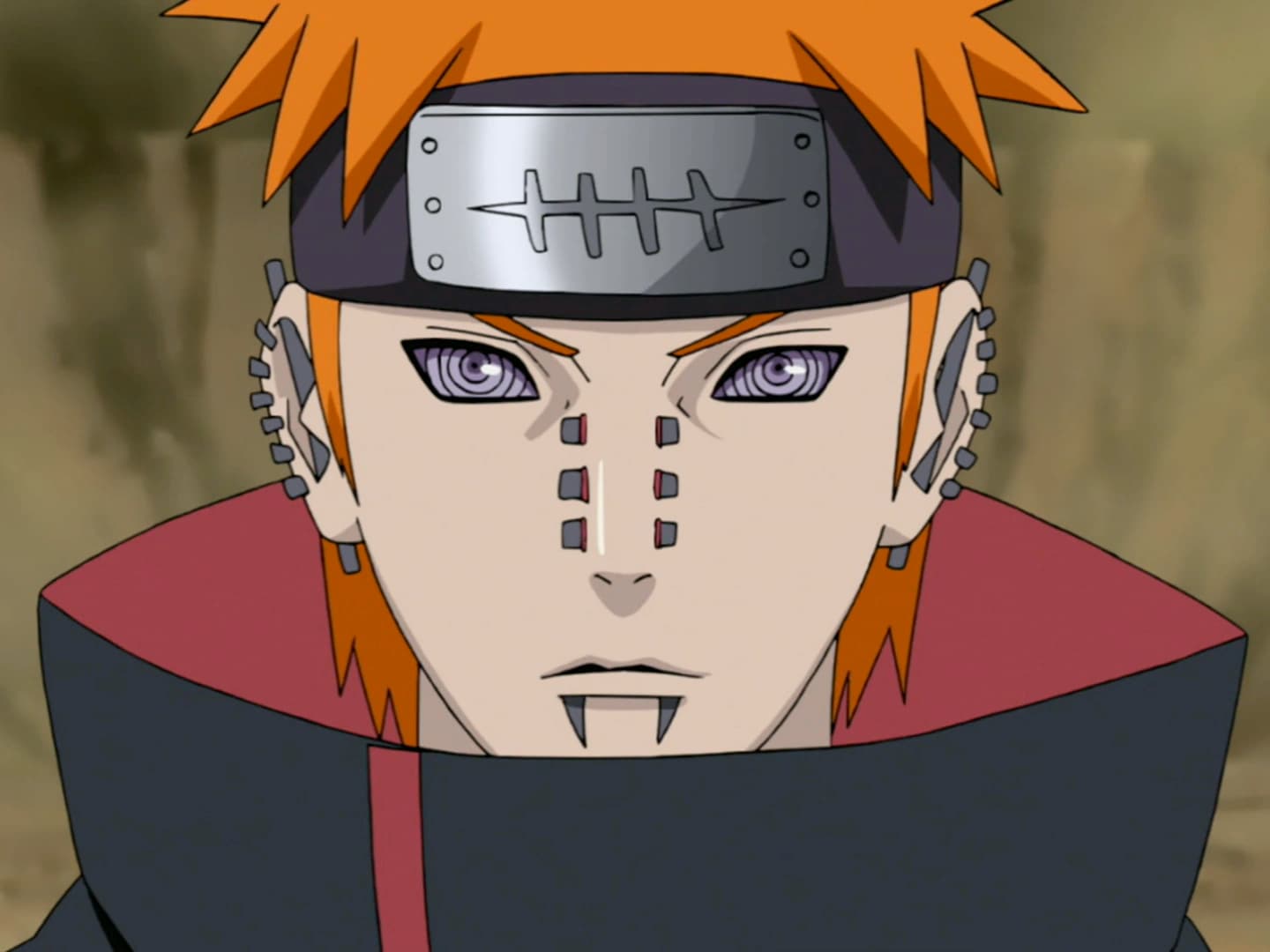
The Rinnegan: its rings are the only geometry on this page.
Nagato
Amegakure — the Village Hidden by Rain
The eyes were not his own, the body would not carry him, and his name sat on someone else's face. He still believed he was the one who would bring the world peace.
For years it rained over Amegakure, and the rain was one man's chakra. This page is not a catalogue of the six bodies — it is the record of the mind that made the rain fall.
The record
The record itself opens with a confusion of names. The archive does not correct it; it writes a note beside it.
- Birthday
- 19 September
- Gender
- Male
- Name on AniList
- Pain (ペイン) — the shared name of the six bodies
- Titles in the record
- Kami (神) · Yogen no Ko (予言の子) · Kono Yo no Kyūseishu (この世の救世主)
- Village
- Amegakure (雨隠れの里)
- Clan
- Uzumaki — the long life and the chakra volume come from there
- Dōjutsu
- Rinnegan (輪廻眼)
- Organisation
- Akatsuki — the visible leader
- Partner
- Konan — the one left of the three orphans
- What stayed beside him
- Black chakra receivers, and the machine that held him upright
- Age · height · blood type
- Empty on the AniList record — the archive does not invent numbers
Three works of the ring
The Rinnegan is not a list of techniques but an authority. These three are the part of it that fits on a page: the eye that sees, the gravity that gathers, the gravity that pushes.
- RinneganSamsara EyeThe highest of the three great dōjutsu — and the one thing Nagato was not born with.The ringed eye is said to be the eye of the Sage of the Six Paths: it opens all five nature transformations and the techniques of the six paths at once. What set Nagato's use apart was not range but COUNT. Through black chakra receivers he fed his own chakra into each bound body, drove six of them at the same time, and saw what all six saw while sitting in a single room. Where the eyes came from is the coldest part of the story: Madara Uchiha implanted them when he was an infant. So the line at the top of this page is literal — the eyes were not his.Six bodies at onceOne shared field of visionImplanted, not inherited
- Chibaku TenseiPlanetary DevastationA core of gravity is released into the air, and the ground wraps itself around it.A small black core rises into the sky and pulls everything beneath it upward: soil, rock, buildings, bodies. What grows up there is a prison — it seals whatever it swallows and hangs above the world. Nagato used it over Konoha, and a new moon appeared in the middle of a battle. The honesty of the technique is this: the destruction does not travel to the target, it takes away the ground the target is standing on.Ends by sealingTakes the groundStays in the sky
- Shinra Tensei · Banshō Ten'inThe push and the pullOne ability in two directions: drive everything away, or bring everything to you.Shinra Tensei is not a strike but a push: contactless, directionless, driving everything nearby away at once. It is what flattened Konoha, and using it at that scale cost Nagato nearly what was left of his body. Banshō Ten'in is the same force reversed — it drags the target into reach. The one known flaw is rhythm: a few seconds must pass between two large pushes, and the interval grows with the scale. Kakashi found that interval by counting in the middle of a battle; what beat Nagato was not power but a clock.ContactlessNeeds an intervalScale has a price
Each of the six bodies is a separate path, and each path has its own file. This page does not count them — they have their own exhibit in the archive. The Six Paths exhibit — start with Tendō
Four things nobody sees
What a technique shows on screen is always the last part of it. These are the earlier ones.
- Gedō: Rinne Tensei no JutsuSamsara of Heavenly LifeIt brings back everyone who died recently within a given area. The price is fixed and not negotiable: the life of whoever uses it. Nagato used it once, for everyone he had killed in Konoha, and died where he used it.
- Chakra ReceiverBlack chakra receiversThe black rods driven into the bodies are not weapons but cabling. They carry Nagato's chakra and bind six corpses to a single will. Some of the same rods are in his own spine — the controlling end and the controlled end are made of the same material.
- Kuchiyose: Gedō MazōThe Demonic Statue of the Outer PathThe empty husk of the body the tailed beasts came out of; Akatsuki's sealing ceremonies are performed at its mouth. Nagato summoned it for the first time when he was young, and lost his body that day. The next section of this page is the bill for that day.
- AmegakureThe rain-sensing net of AmeThe rain over the village is not weather: Nagato's chakra is inside the drops and every drop is a sense organ. A stranger walking into a street is counted before the second step. As surveillance it is flawless; as a climate it is indescribably wearing.
Five faces under the rain
Five people stand in Nagato's story, and all five took hold of the same question from a different side.
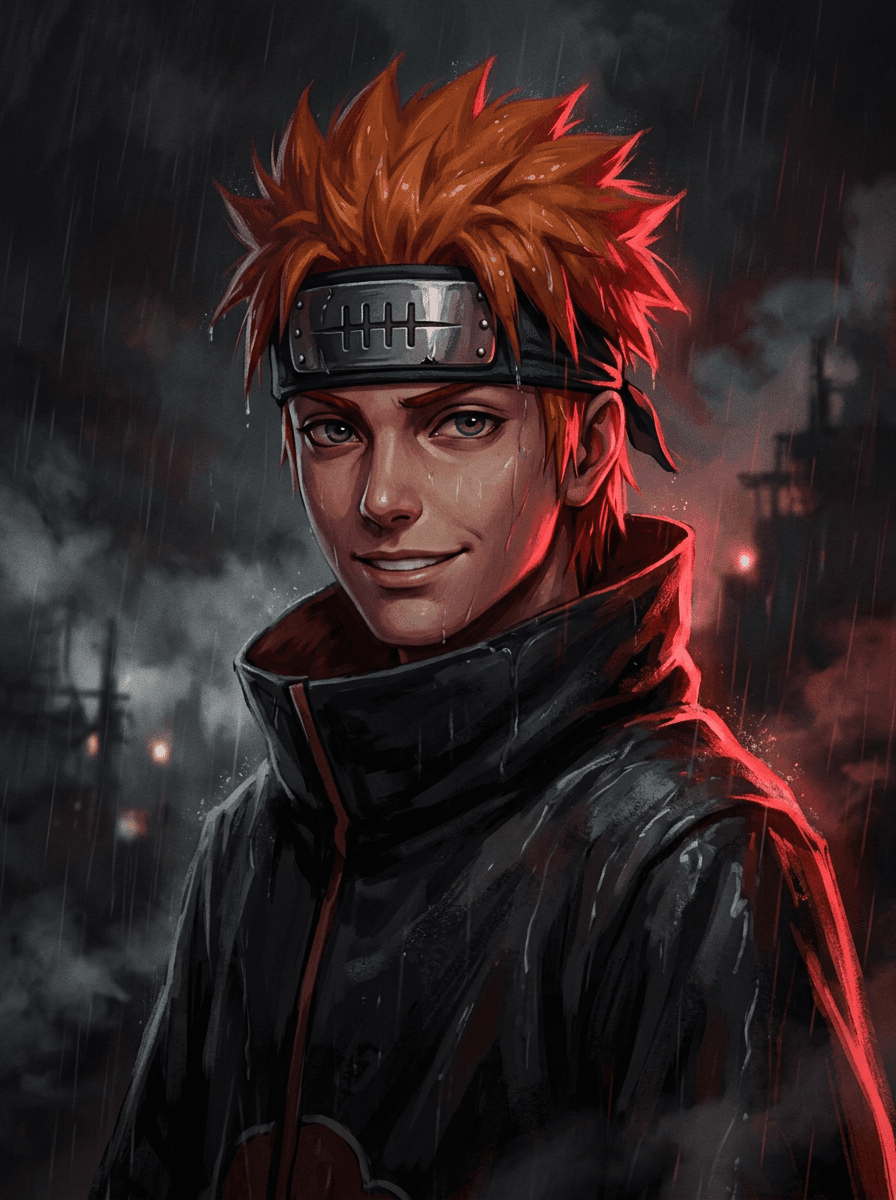 The first pathYahikoThe boy who wanted peace for Ame first. After he died his face became Pain's face; the countenance the world took for a god was in fact his closest friend's.
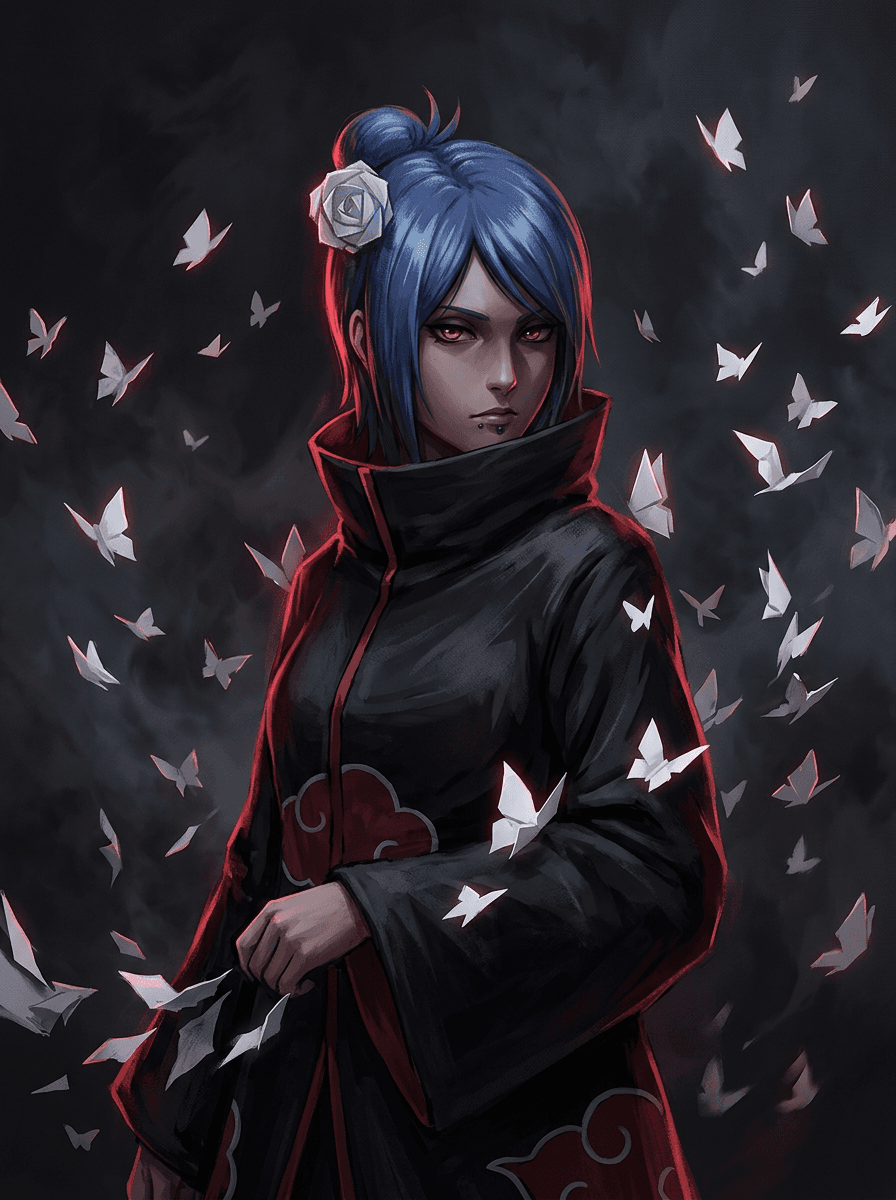 The one who stayedKonanThe one left of the three orphans. She spent years at the door of Nagato's room, and when he died she carried his body and Yahiko's away.
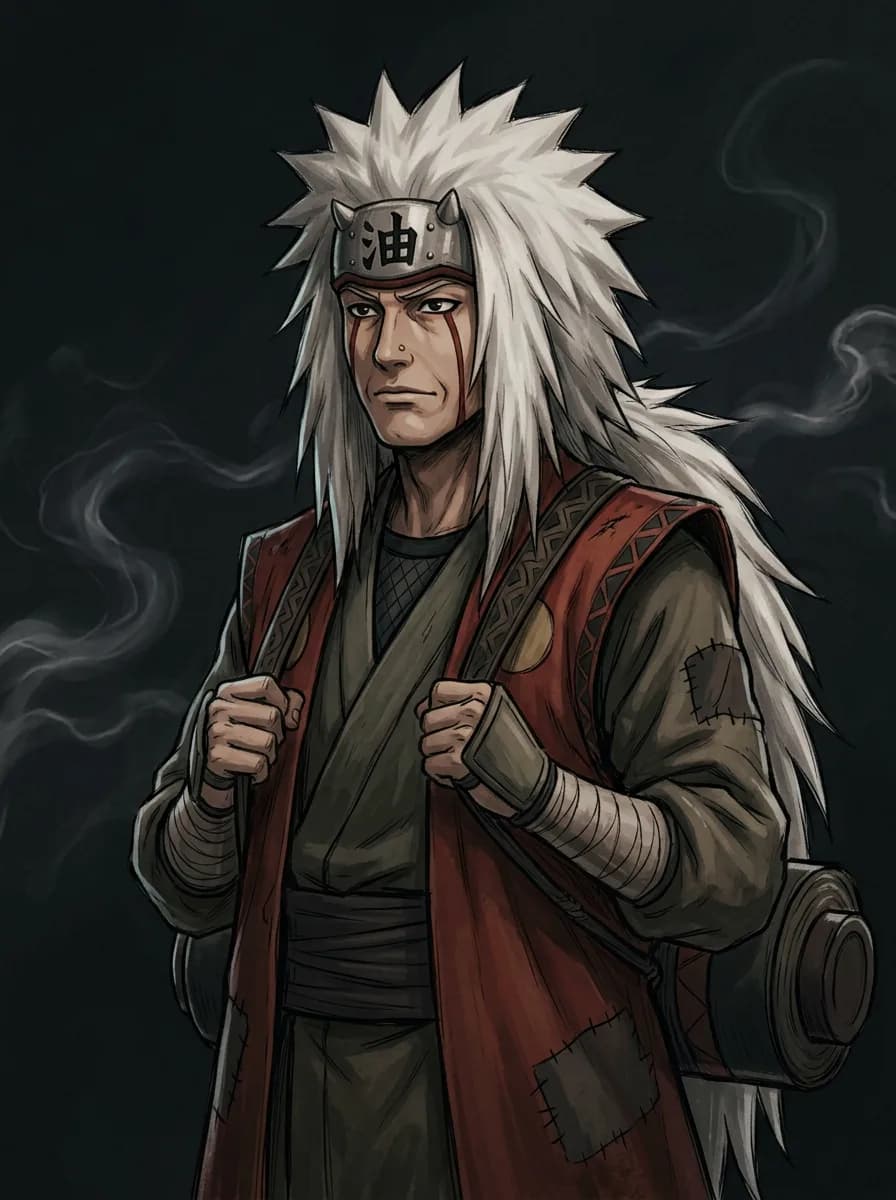 The teacherJiraiyaHe fed the three children, then taught them to fight, then stayed three years. When he saw Nagato's eyes he believed he had found the child of the prophecy. It took twenty years to learn he was wrong, and he learned it standing across from his own student.
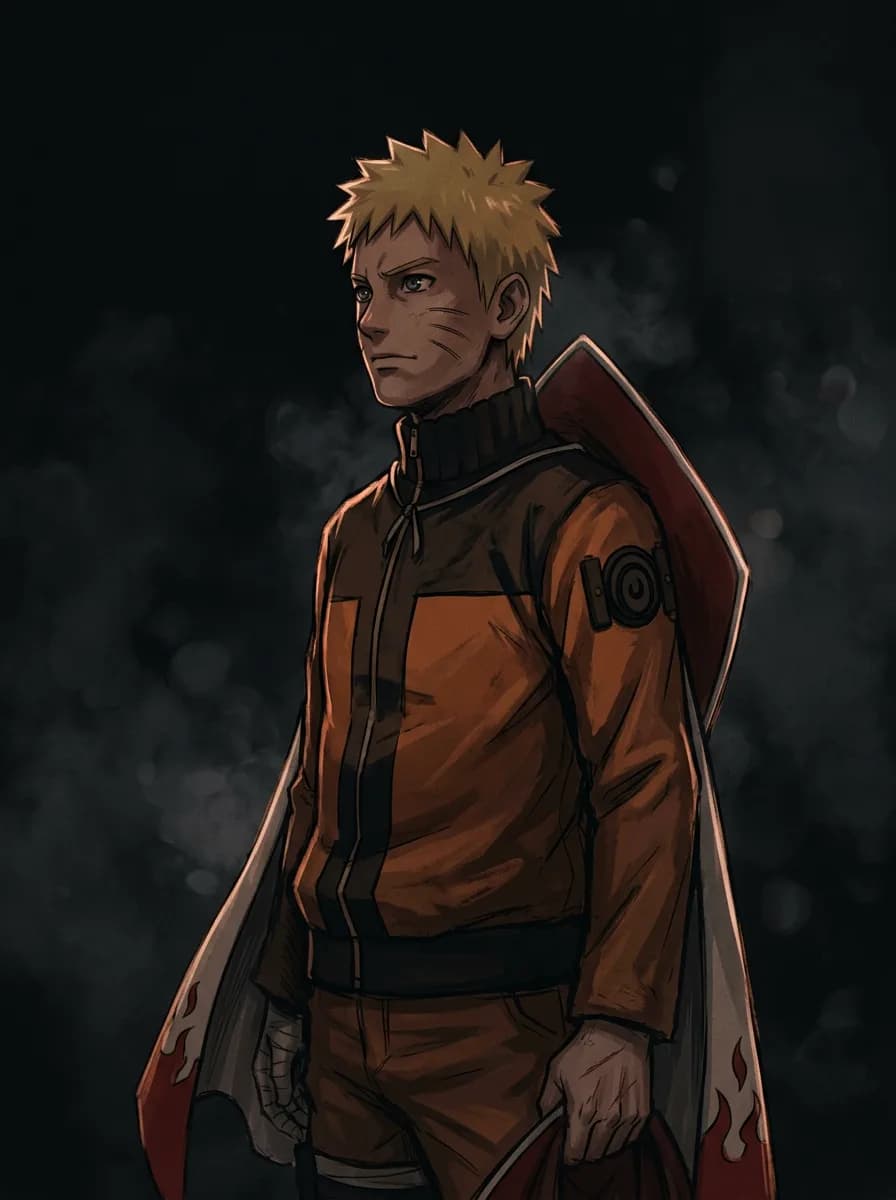 The answerNaruto UzumakiA boy carrying the same clan name, the same teacher and the same loss. He answered Nagato's question not with a weapon but with a book their teacher had written.
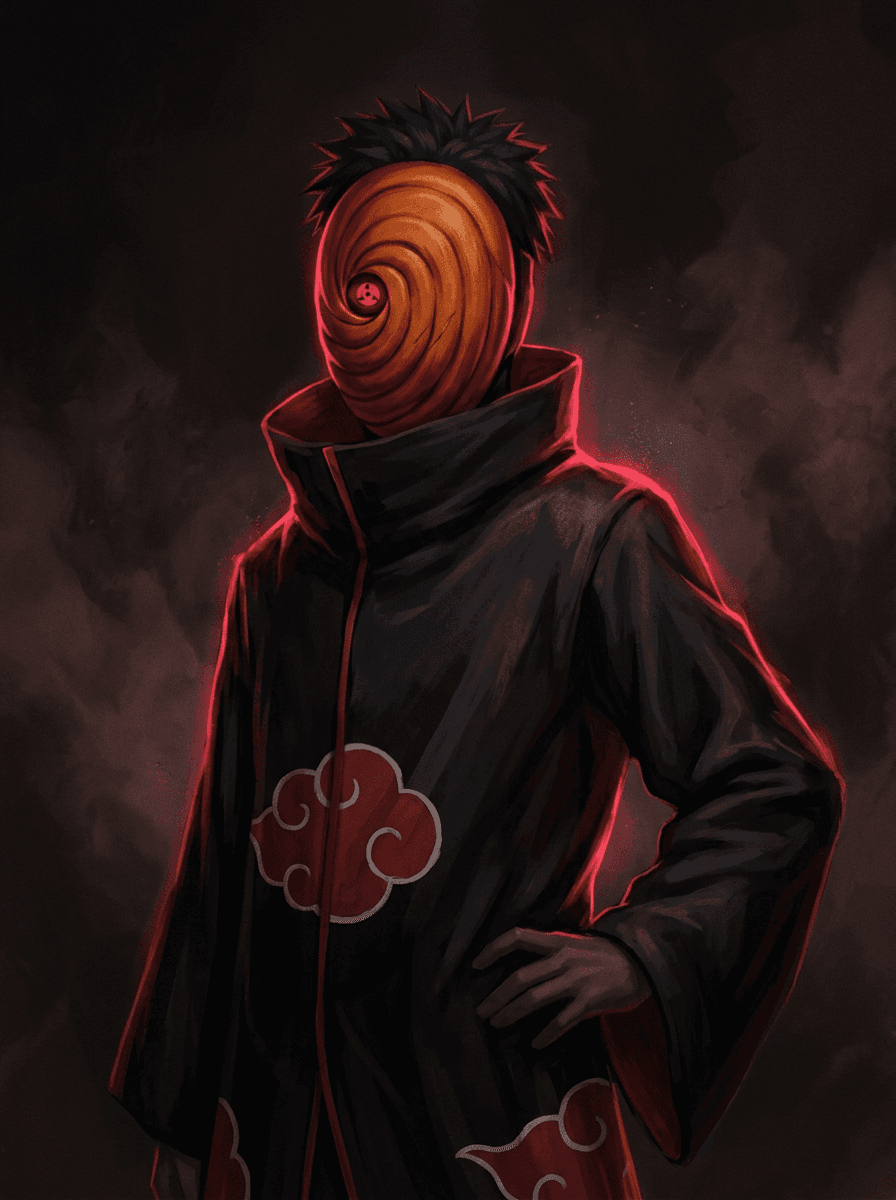 The one behind the curtainObito UchihaHe introduced himself as Madara and ran Akatsuki under Nagato's name. When Nagato died he was the first to arrive, and he took the eyes — the eyes at the top of this page went back to the hand that had lent them.
Three questions
This section is an argument. Open each question: Nagato's answer on the left, the reply on the right. As the questions open, rain falls across the page; at the third it stops.
Nagato
Shared pain
Nagato's answer is not a feeling but a mechanism: people stop only when they have tasted another's pain in their own body. Therefore you need a weapon large enough that everyone loses at the same moment; when it is used the world learns pain, and for a while nobody moves. That is not peace but a pause manufactured by fear — and he knew it. He said himself that the pause would end, that people would forget, and that the cycle would start again. He could see the crack running through his own answer, and defended it anyway because he had found nothing better.
Jiraiya
The reply
His teacher had no answer and did not hide that he had none. What Jiraiya held was not a formula but a posture: don't stop looking. He believed someone would find the answer one day, wrote that belief into a novel nobody read, and raised the boy he had named after it. The line he said to Nagato begins in exactly the same place as this page's title, then walks the other way.
“Knowing pain allows a person to be kind. Pain lets a person grow — and how you grow is up to you.”
Jiraiya, to Nagato Nagato
Revenge is natural
Nagato described justice not as an abstract scale but as a natural chain: whoever loses someone suffers, whoever suffers hates, whoever hates wants payment. No link in that chain is deviant — every one of them is the ordinary human condition. So he refused to file what Konoha did to his village as “war” and what he did to Konoha as “terror”; he said both were links in the same chain. That was his measure: justice is scaled by the size of the suffering party's pain, and the suffering party does the measuring.
Naruto Uzumaki
The reply
Naruto did not refute the description — he could not, because he was carrying the chain himself: he had lost the same teacher, and his first want was exactly what Nagato had described. All he did was cut the chain at his own link. He did not change the measure; he refused to settle the account. He did not kill, and he said so not with a speech but by lowering the blade in his hand. His answer was not an idea but a subtraction.
The archive
Note
Nagato brought back everyone he had killed and gave his own life for it — not because he had changed his mind but because he had extended credit to one person. Naruto built peace; then another war came, and the people who died in it did not come back. Neither was wrong. Neither won.
There is no answer to this one.
The opposite column is deliberately empty. The archive takes no side here: both answers stand above, at the same size and with the same seriousness. The rain stopped at this point too — not because the argument ended, but because it went quiet.
Each question is a button: reach it with Tab, open it with Enter or Space.
The rods
The quietest section on this page is the heaviest one.
The force that flattened Konoha did not come from a battlefield but from a closed room. In that room there was a machine, and a body wired into it.
- The machine
- The day he first summoned the Gedō Mazō his body was spent; he never walked again. After that his life was lived inside a device the rods in his spine were wired into. That device kept him upright and carried chakra to the six bodies at the same time: the life support and the weapon were one machine.
- Distance
- The six bodies that walked, spoke and killed in Konoha were not him. He was kilometres away, inside a tower, sitting without moving. That is the true location of all the destruction on this page: a dark room and a motionless man.
- The bill
- Every step the Six Paths took came out of his chakra; when a body fell, his body paid for it. The larger the visible power, the heavier the invisible bill. When he used the word “god” about himself he used it knowingly — nobody understood better how helpless something that powerful could be.
The man who looked like a god could not get up.
A life in five entries
Five entries. Each one sits a little deeper than the last, and the page sinks with them.
The war years
Someone else's war, inside his own house
Ame took the great countries' war onto its own soil: other people were fighting, and the village being destroyed was Nagato's. One night two Konoha shinobi came into his house and killed his mother and father. That day the Rinnegan opened in the child's eyes, and where he first used it two bodies were left. Nagato's story does not begin with him as a victim, but as victim and killer in the same minute.
The apprenticeship — three years
Three orphans of the rain
Three hungry children were left over from the war: Yahiko, Konan, and Nagato who would not speak. Jiraiya fed them first, then taught them to fight, then stayed three years. When he saw the Rinnegan he decided he had found the child of the prophecy. The three founded a small organisation to end the war in their own country; they called it Akatsuki, and in those days its purpose really was peace.
The break
Yahiko's death
In the trap laid by Hanzō and Danzō, Konan was taken hostage and Nagato was given one option: kill your friend, save the girl. He was not allowed to choose — Yahiko let himself fall onto the kunai in Nagato's hand. After that day Nagato never spoke in his own name again. He bound his friend's body with a rod, that became the first path, and he introduced himself to the world as Pain.
The Pain years
The man who took the name of a god
Akatsuki grew and its purpose changed: peace would now come from collecting the tailed beasts. Nagato was the organisation's visible leader; behind the curtain stood someone introducing himself as Madara. Jiraiya went to face his own student and did not come back from that fight. Then came Konoha: the village was flattened by a single technique, and Nagato's name was written onto the map for good.
The last day
A conversation, and the rain stopping
After bringing down the six bodies one by one, Naruto walked into Nagato's room carrying not a weapon but a book: the novel their teacher wrote and nobody read. The conversation was long and neither convinced the other; Naruto only said he would not take revenge. In return Nagato gave not his answer but his life: he used Rinne Tensei, brought back everyone he had killed in Konoha, and died there. What he left behind was not a doctrine but a line of credit.
“Know pain.”
Nagato — above Konoha, as Pain
Nagato
“Know pain.”
“Knowing pain allows a person to be kind. Pain lets a person grow — and how you grow is up to you.”
itami o shire — “know pain”
Profile data (birthday, gender, alternative names) and the fallback portrait come from AniList, where this character is filed as “Pain” and the age, height and blood-type fields are empty. The full-size portrait is the archive's own upload. The rain curtain, the Rinnegan rings, the technique sigils and the diagram of the wired body are SVGs drawn by hand for this page. AniList profile