
Hyūga — branch house
Neji Hyūga
The boy who said fate is written at birth fought not to break that sentence but to prove it. In the end he disproved it himself.
There is a seal on his forehead, and it says one sentence: this house is not yours, you belong to it. For thirteen years Neji applied that sentence not only to himself but to everyone who stood in front of him.
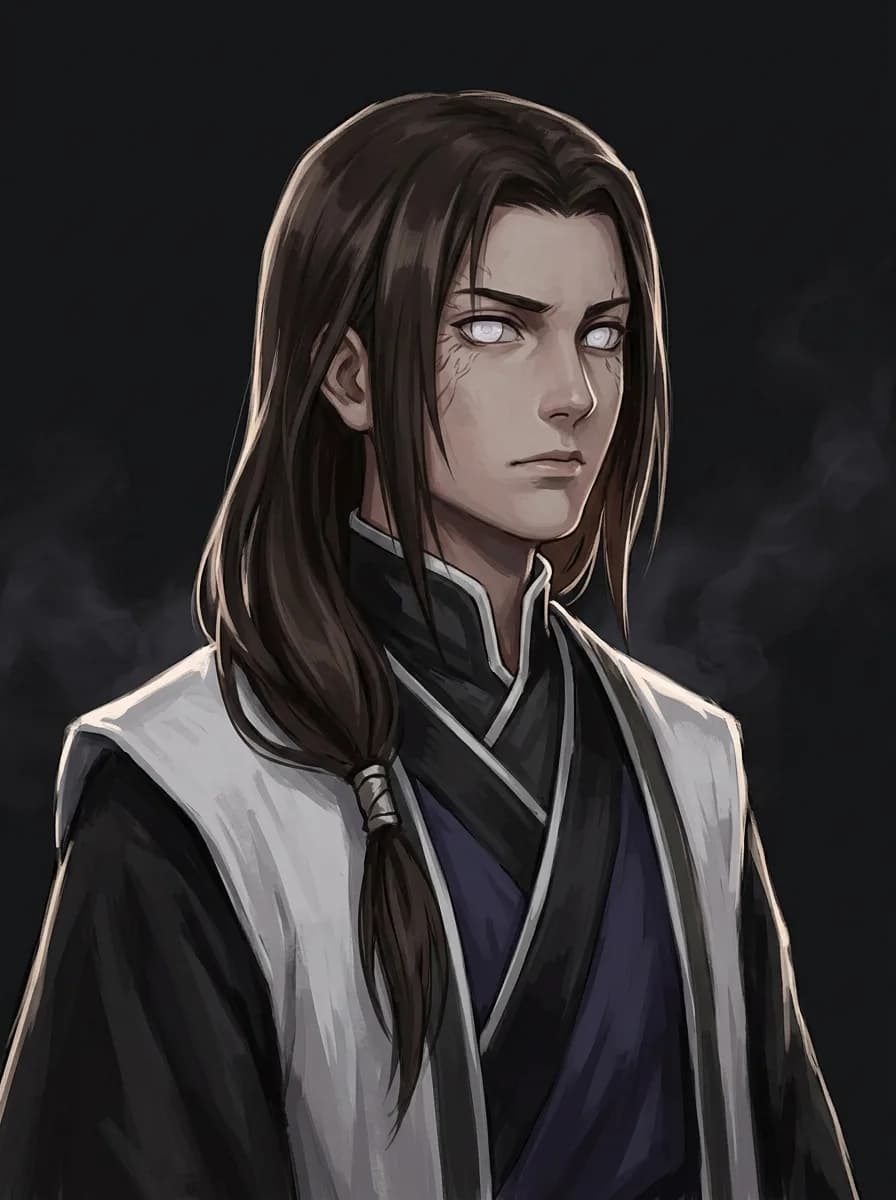
The veins open backwards from the forehead: the only outward sign that the Byakugan is working.
Written at birth — The seal beneath the forehead
The rest of this page explains techniques. This part does not: this part is why the page exists.
The Hyūga clan is split in two: the main house (宗家) and the branch house (分家). The split is decided by birth order, not by talent. A child born into the branch house is marked at four with a green seal on the forehead, and that seal is called the Caged Bird. Its job fits in one sentence: to keep the Byakugan from ever leaving the clan.
The seal can be triggered from a distance with a hand sign from the main house; when it fires, it burns the chakra pathways inside the brain. When its bearer dies, it closes on its own and renders the eye unusable. The branch house, in other words, is bound to protect the main house both alive and dead. Neji's forehead protector covers this seal: no one sees it, everyone knows it is there.
Neji was four when his father Hizashi died. Hizashi was the twin of Hiashi, the clan head — born a few minutes later, and so born into the branch house. After Kumogakure's failed abduction attempt the village demanded Hiashi's body in exchange for their dead envoy; the one who went was Hizashi. Neji was told it had been an order, and for years that was what he knew: his father had been killed in his brother's place over a few minutes of birth order. From that day the seal on his forehead stopped being a clan rule and became evidence.
Unchangeable — The record
Nine lines. Seven are measurements from AniList, one is a class ranking, and the last is a piece of cloth.
- Birthday
- 3 July
- Height
- 172 cm
- Blood type
- O
- Age
- 14 – 17 (profile range)
- Rank
- Genin (I) · Jōnin (II)
- Team
- Team Guy — Might Guy, Rock Lee, Tenten
- Clan
- Hyūga — branch house (分家)
- Academy
- Top of his year
- What he carries
- A forehead protector — the cloth over the seal
Inevitable — Three shapes of the palm
Hyūga combat is a single idea: see the inside, shut the inside. These three are that idea at three settings — and no one taught Neji any of them.
- JūkenGentle FistIt passes the skin, ignores the muscle, and shuts the pathway inside.The clan's signature form. Chakra released from the palm enters the body and lands directly on the chakra pathways or on the organ itself; there may be no mark outside, while inside a gate has closed. So Jūken is a matter of sight first: a hand that cannot see where it is striking strikes nothing, however gentle it is. Neji did not learn this from a teacher. Branch-house children are not taught the clan's real techniques; he watched the main house train from across the courtyard and worked it out alone.Chakra released from the palmThe target is the tenketsuTaught to himself
- Hakke Rokujūyon ShōEight Trigrams Sixty-Four PalmsThe count doubles each round, and where it ends is known before the first strike.The opponent is placed at the centre of the eight trigrams, the field is drawn under their feet, and the sequence begins: two, four, eight, sixteen, thirty-two, sixty-four. At the end, sixty-four tenketsu are shut; the target may still be standing but cannot use chakra, which is to say they have temporarily stopped being a ninja. The hard part is not the number of strikes but landing every one of them exactly as the tempo climbs. This is the technique the main house is proudest of — and nobody taught it to Neji.2 · 4 · 8 · 16 · 32 · 64Sixty-four tenketsu shutWorked out without a teacher
- Hakkeshō KaitenEight Trigrams Revolving HeavenThe only defence of a clan built on attack: release the chakra outward, and spin.Jūken releases chakra by measure in order to shut things down; Kaiten empties that same chakra out of every tenketsu at once, and the spinning body raises a dome around itself. What arrives does not lodge — it glances off. Inside the clan it counts as very nearly perfect defence, and it is a main-house secret: it is Hiashi's technique. Neji reconstructed it by watching. Tenten spent months standing opposite him, throwing weapons, testing whether the dome actually closed.Released from every tenketsuNear-perfect defenceA main-house secret, read off by eye
Settled in advance — Four small certainties
The reach of an eye, the vacuum in a palm, the mechanics of a seal, and the three hundred and sixty-one gates in a body.
- Byakugan — reach and blind spotAlmost complete peripheral vision, kilometres of reach, sight through walls and straight into the chakra network. But behind the neck, level with the first vertebra, there is a blind spot that never closes. Neji widened his reach alone and narrowed that spot — he never sealed it. No Hyūga ever has.
- Hakke Kūshō — Vacuum PalmNeji's own answer to Jūken's range problem: he empties the chakra in his palm into the air instead of a body and throws it as a pressure wave. A line that does not exist in the clan's inventory — the only Hyūga technique that can shut something down without touching it.
- The branch-house seal — mechanicsA hand sign from the main house triggers the seal from a distance and burns the chakra pathways in the brain; it can be used as punishment or as an execution. On the bearer's death it closes by itself and makes the Byakugan unusable. It has two functions, and both protect the same thing: the eye.
- Tenketsu — shutting a chakra pointThere are three hundred and sixty-one tenketsu in a body: the doors where the chakra network opens outward. A Jūken strike landing at the right angle shuts one, and no chakra leaves that point again. Shut sixty-four of them and forming a hand sign or gathering chakra both become impossible. All of Neji's combat arithmetic rests on that one sentence.
The count already given — Eight trigrams, sixty-four gates
The sequence is named after its own arithmetic: it doubles every round, and where it ends is known before the first strike lands. Press a stage — the strikes will be marked up to it, in order.
“Two palms! Four palms! Eight palms! Sixteen palms! Thirty-two palms! Sixty-four palms!”
0strikes
0tenketsu shut
The sequence has not started. Pick a stage: the strikes will be marked up to it, in order.
Use the left and right arrow keys to move between stages; space or Enter replays the sequence.
In vain — Those outside the cage
Five people. Not one of them argued with Neji about fate; all five refuted him simply by living their own lives.
 The main houseHinata HyūgaThe cousin who drew him in the preliminary. Neji told her she could not change her fate, and very nearly killed her. Four years later he died beside that same girl, shielding her.
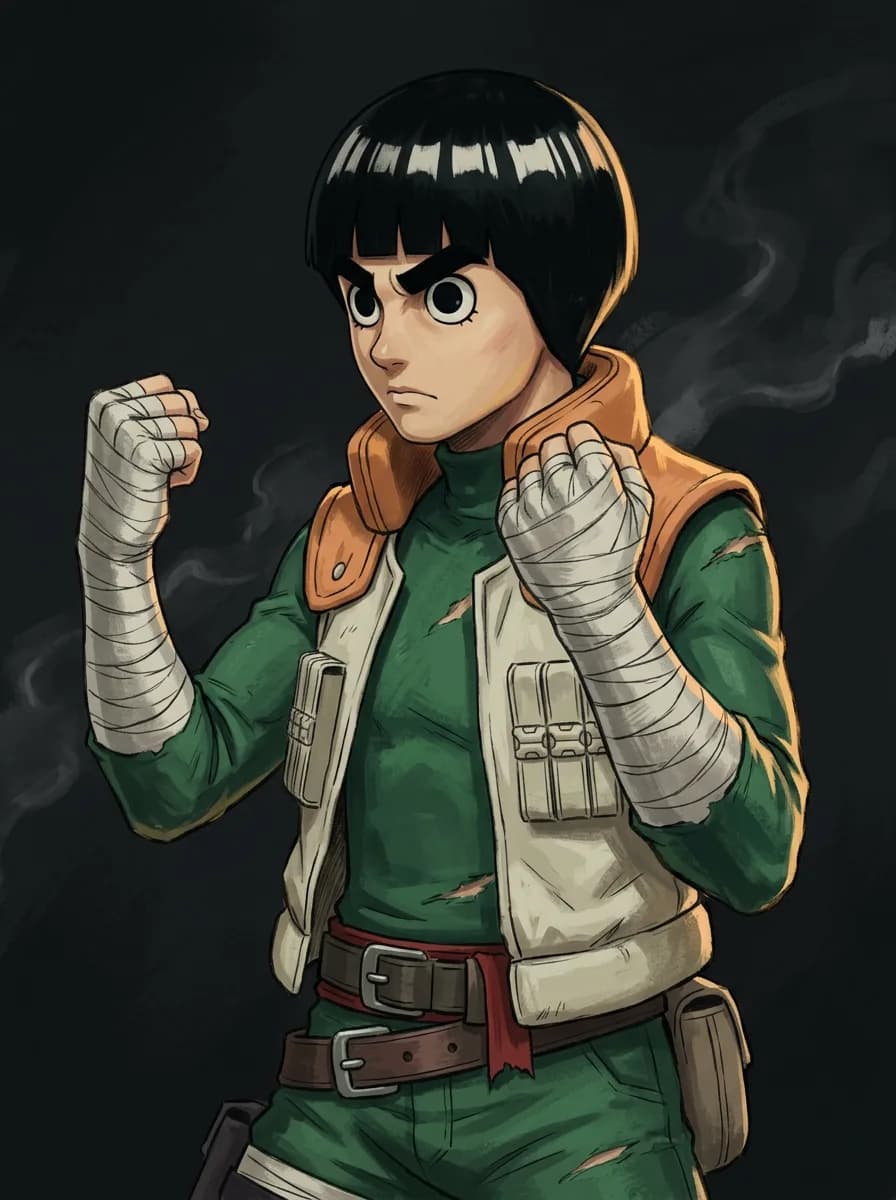 The counter-argumentRock LeeA boy who cannot mould chakra, has no clan, and was given nothing. He was the first piece of evidence against Neji's thesis on fate — and Neji never once admitted it to him.
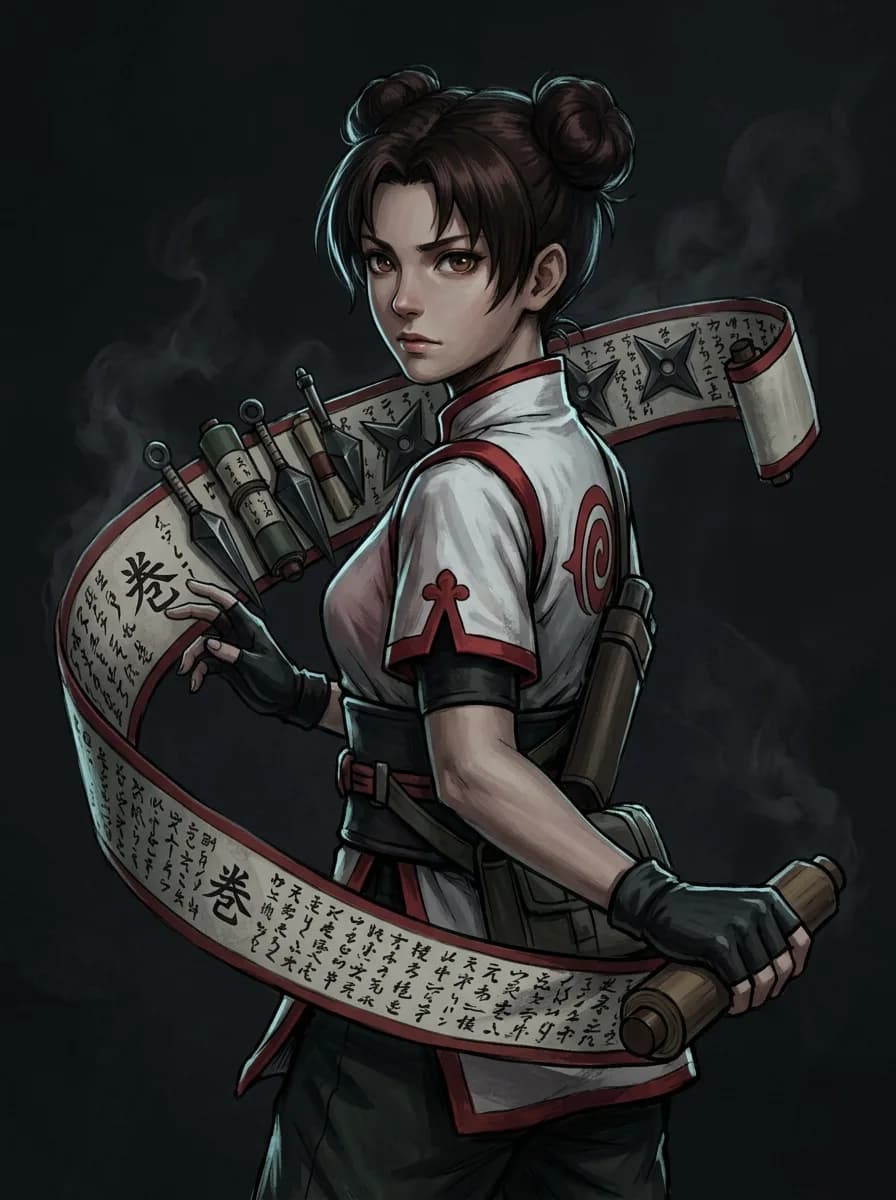 The one who tested itTentenThe only person who stood opposite him in training. She threw thousands of weapons at him while he worked on Kaiten; she was the first to see the dome actually close.
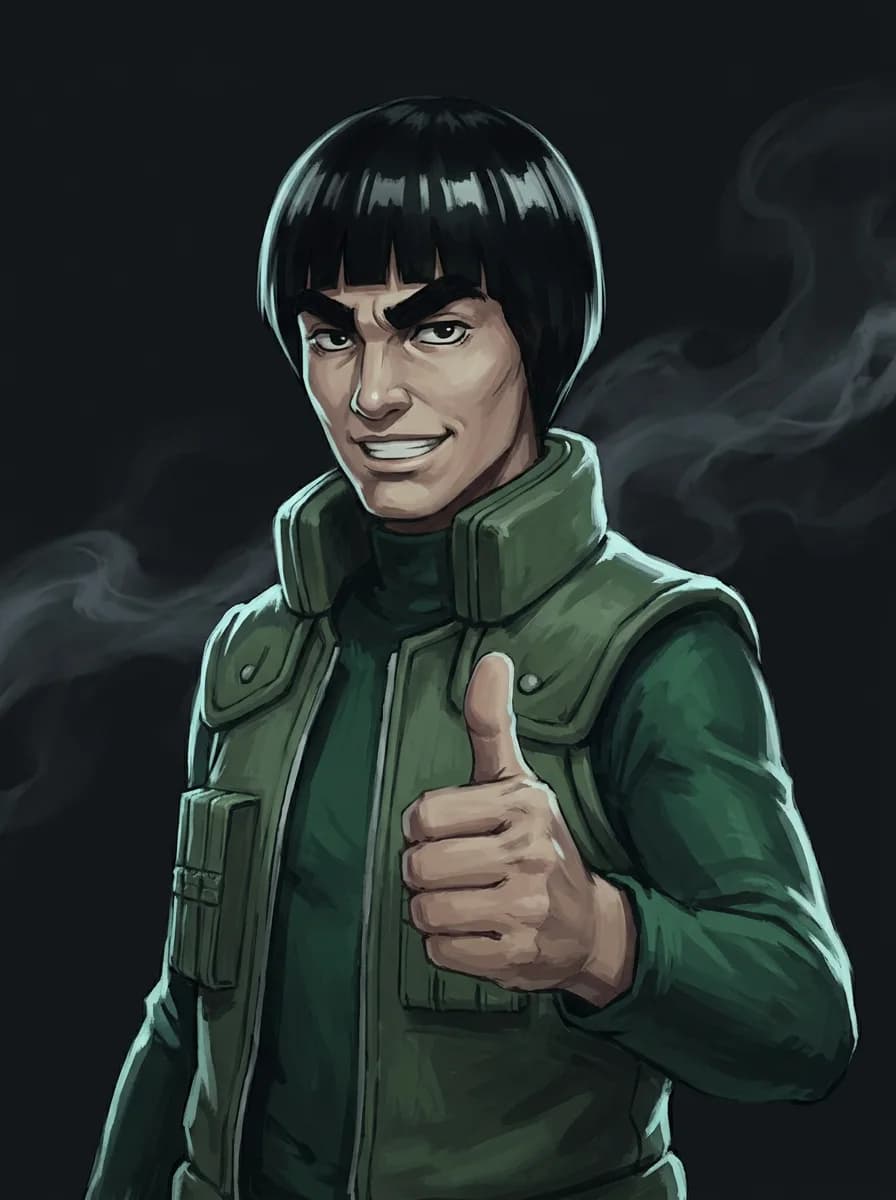 The teacherMight GuyHe never told Neji that fate does not exist. He simply put two students on the same field — one a genius, one a failure — and left them both in the same sweat.
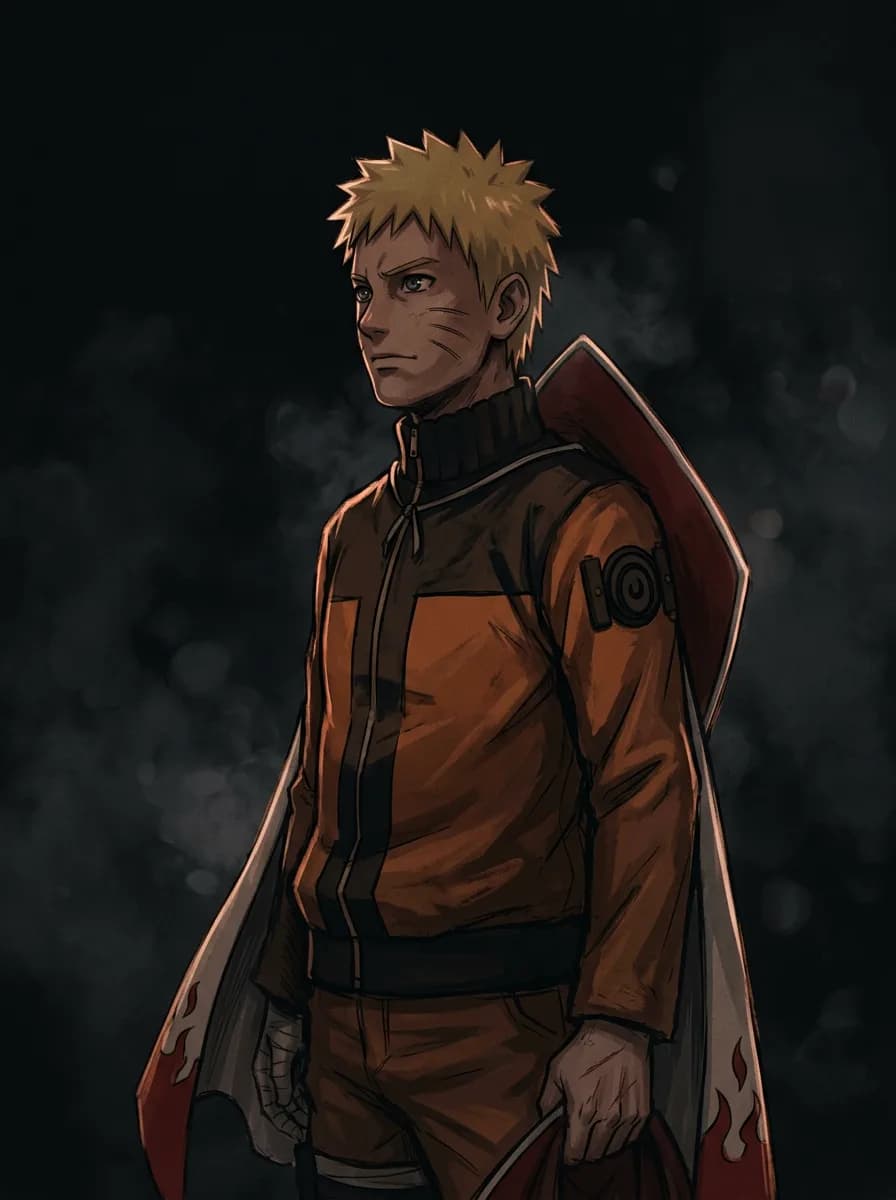 The defeatNaruto UzumakiHe beat Neji in the exam final. What Neji lost was not a match but a sentence; after that day he never used the word fate in the same sense again.
Written in advance — A life in five entries
Four of them happen at thirteen or earlier. The fifth comes four years later and is the only voluntary line on this page.
Age 4
The seal, and the father who went
The branch-house seal was set on his forehead. In the same period his father Hizashi was handed over to Kumogakure in place of his twin brother Hiashi. The story Neji was told was short: the main house asked, the branch house went. That sentence, handed to a four-year-old, became the only instrument he had for explaining the world for the next thirteen years.
Age 13
Facing his cousin in the preliminary
The draw for the Chūnin exam preliminaries put him against Hinata. Before the fight he told her she would never be heir, and then that she could not change her fate; after he had already won he kept striking, and the jōnin had to step in. The bill for his anger at the main house was handed to a girl who had no part in any of those decisions.
“You cannot change your fate.”
Neji Hyūga — Chūnin exam preliminary Age 13
The thesis collapses in the final
In the final he drew the Academy's worst student. Neji was top of his year, the clan's prodigy, the boy who had worked out every technique alone — and he lost. What he lost was not a match: the one sentence he had leaned on for thirteen years was refuted in the dirt, in front of everyone.
After thirteen
The letter, and training with the main house
After the exam Hiashi gave him the letter his father had left. No one had forced Hizashi: he had chosen to go — not for the clan, but for his brother and for his son. What Neji had taken for an order for thirteen years turned out to have been a decision. The main house called him in to train, the tension between the two branches eased for the first time, and Neji became the first jōnin of his year.
Age 17
In the war, of his own accord
In the Fourth Great Shinobi War, when the Ten-Tails' wooden spears turned towards Naruto and Hinata, Neji stepped into their path. No one had asked him to, there was no order, no seal had been triggered. He gave his life not for the rule of the branch house but for two people he had chosen himself — doing exactly what his father's letter had described.
“Because your life is not yours alone any more.”
Neji Hyūga — to Naruto, on the battlefield
Neji Hyūga
“You cannot change your fate.”
“Because your life is not yours alone any more.”
kago no naka no tori — “caged bird”, the name of the branch-house seal
The section headings on this page were written in a language that says fate does not change. That language was not the archive's — it was Neji's own.
He did not carry it to the end. The boy who told a girl at thirteen that fate is written at birth walked, at seventeen, of his own accord to a place no one had asked him to go.
The seal stayed on his forehead; it was there even as he died. What broke was not the cage. It was the sentence.
Profile data (birthday, height, blood type, age, rank) and the fallback portrait come from AniList. The full-size portrait is the archive's own upload; the vein network, the branch-house seal, the eight trigram bars and the sixty-four tenketsu diagram are SVGs drawn by hand for this page. AniList profile